


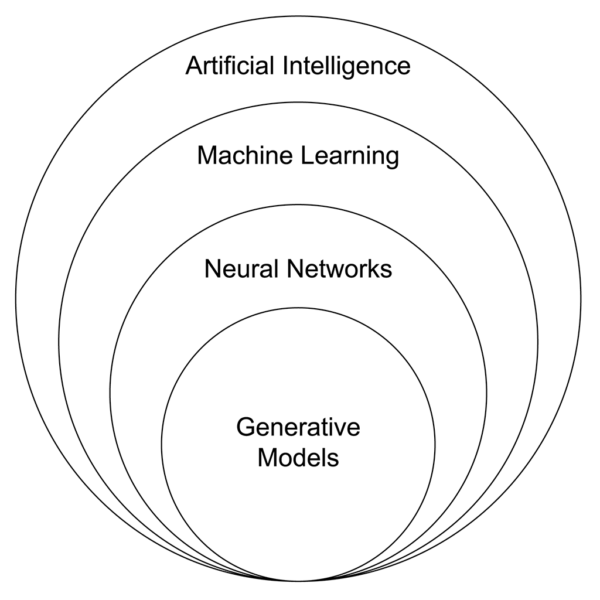
Artificial intelligence shapes modern systems across society. Machines now process vast amounts of data, recognize patterns, and execute complex decisions. Studying this technology provides individuals with the analytical tools required to understand and influence technological progress. Academic institutions and research laboratories worldwide report unprecedented demand for courses focused on machine learning, neural networks, and algorithmic design.
The Academic Imperative
Higher education institutions now prioritize computer science and computational logic within their core curricula. Stanford University and the Massachusetts Institute of Technology offer specialized degree tracks dedicated entirely to machine intelligence. These programs examine the mathematical foundations of probability, linear algebra, and calculus that govern algorithmic functions.
Scientific journals consistently publish peer-reviewed papers highlighting breakthroughs in automated reasoning. Publications like the Journal of Artificial Intelligence Research document how computational models solve problems in medicine, climatology, and logistics. Academic rigor ensures that learners acquire transferable skills rather than temporary technical tricks.
Economic Impact and Workforce Projections
Labor markets undergo structural transformations as automated systems integrate into standard business operations. The World Economic Forum published a report indicating that technological integration will displace certain routine occupations while simultaneously generating millions of new technical roles. Professionals who understand machine logic secure positions with higher compensation packages and greater job security.
Government agencies monitor these labor shifts closely. The United States Bureau of Labor Statistics projects that employment in computer and information technology occupations will grow much faster than the average for all occupations over the coming decade. Analysts attribute this expansion directly to the adoption of automated data processing frameworks across private and public sectors.
| Industry Sector | Projected Job Growth Rate | Primary Technological Driver |
|---|---|---|
| Healthcare | 28% | Diagnostic Imaging Analysis |
| Financial Services | 22% | Fraud Detection Algorithms |
| Transportation | 25% | Autonomous Navigation |
| Manufacturing | 20% | Predictive Maintenance |
Empirical Evidence and Industry Case Studies
Data from corporate deployments demonstrate the tangible value of algorithmic integration. A case study published by McKinsey & Company examined retail organizations that implemented automated inventory forecasting. These entities reduced stockouts by 30 percent and improved supply chain efficiency significantly.
Financial institutions rely heavily on neural networks to monitor transactions in real time. Visa deployed fraud-prevention models that analyze millions of card payments per second. This system prevents billions of dollars in fraudulent activity annually. Personnel trained in computational logic design and maintain these security architectures.
Recent industry news highlights the expansion of generative models into legal, architectural, and software development sectors. Corporate boards frequently state that workforce proficiency in computational tools remains a primary factor in maintaining competitive advantage.
Unique Insights from Practitioners
Professionals who build neural networks recognize that the field requires more than coding ability. Practitioners need a strong grasp of epistemology, ethics, and human psychology. Systems trained on historical data often inherit human biases. Scholars and engineers must identify these biases before deploying models into public infrastructure.
Computing power continues to increase according to historical scaling trends, yet algorithmic efficiency remains the primary bottleneck. Scientists who design leaner, faster mathematical models achieve breakthroughs that brute-force computing cannot replicate. Studying the discipline offers individuals the chance to contribute to these foundational advancements.
Institutional Reports and Government Sources
Public policy increasingly reflects the need for advanced technical education. The White House Office of Science and Technology Policy released strategic guidelines emphasizing the promotion of technical literacy across all educational levels. Governments allocate billions of dollars toward research grants to maintain national competitiveness in computational sciences.
The European Union established regulatory frameworks through the Artificial Intelligence Act. This legislation classifies systems by risk level, requiring developers to understand compliance standards, transparency protocols, and data privacy laws. Educational programs now incorporate legal and ethical training to prepare graduates for these regulatory realities.
Frequently Asked Questions
What mathematical prerequisites are necessary before studying machine intelligence?
Students require a solid foundation in linear algebra, multivariable calculus, probability theory, and statistics. These mathematical disciplines allow learners to understand optimization functions and probabilistic modeling.
How does machine learning differ from traditional computer programming?
Traditional programming relies on explicit rule-based instructions written by humans. Machine learning algorithms ingest historical data, identify underlying patterns independently, and generate their own predictive rules.
Do professionals need a doctoral degree to enter the field?
Many entry-level roles require only a bachelor’s degree in computer science or a related quantitative discipline. Research positions and advanced engineering roles often require graduate degrees.
What ethical considerations are covered in academic courses?
Curricula typically address data privacy, algorithmic bias, accountability for automated decisions, and the societal impact of workforce displacement.
Where can individuals find reliable academic literature on the subject?
STUDY AI, is a page dedicated to various AI courses in multiple leaning formats for ease of use by people looking to begin or enhance their knowledge in Artificial Intelligence.


