


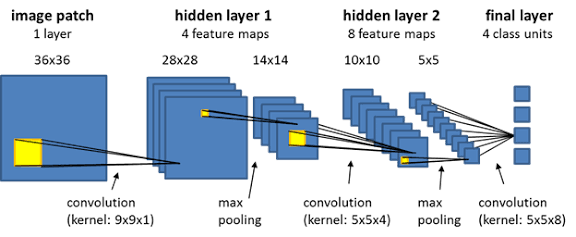
No, they are still relevant. CNNs currently undergo a period of evolution. Modern AI researchers increasingly combine the best attributes of both worlds.
For over a decade, Convolutional Neural Networks (CNNs) served as the undisputed foundation of computer vision. Researchers and engineers relied on CNN architectures to power facial recognition, medical imaging, autonomous vehicles, and everyday photo organization. However, recent breakthroughs in artificial intelligence challenge this dominance. Emerging architectures, particularly Vision Transformers (ViTs), now rival or surpass traditional CNNs across numerous benchmarks. This technological shift prompts a critical industry question: Are CNNs obsolete?
The Rise of the Vision Transformer
To understand the debate, we must examine the challenger. Vision Transformers adapt the transformer architecture—originally designed for natural language processing—to image recognition tasks. Unlike CNNs, which process images through localized filters that scan pixel neighborhoods step by step, Vision Transformers divide an image into distinct patches. Self-attention mechanisms then analyze the relationships between every patch simultaneously.
This global perspective grants Vision Transformers a distinct advantage. While a CNN struggles to interpret an object unless it captures immediate spatial surroundings, a ViT connects distant parts of an image instantly. As datasets grow larger, Vision Transformers scale efficiently, consistently outperforming older models in complex visual tasks.
Why CNNs Still Matter
Although Transformers are gaining traction, asserting that CNNs are obsolete neglects their ongoing engineering strengths. CNNs are characterized by an inductive bias, which implies that their architecture is fundamentally designed to understand the relationship between closely situated pixels. This intrinsic assumption facilitates effective learning from smaller datasets.
Furthermore, CNNs require significantly less computational power during inference. Edge devices, smartphones, security cameras, and Internet of Things (IoT) hardware often lack the memory and processing capacity to run massive transformer models. Engineers frequently optimize CNNs because they deliver high accuracy with minimal latency and energy consumption.
The Future: Hybrid Architectures
Rather than facing total replacement, Hybrid models integrate convolutional layers to extract low-level local features with transformer blocks to capture global context. This synergy yields powerful systems that maintain high accuracy while remaining computationally viable for real-world deployment.
Conclusion
Convolutional Neural Networks are not obsolete. Instead, the AI landscape has expanded to offer specialized tools for diverse challenges. Vision Transformers dominate large-scale, cloud-based applications requiring global image comprehension, while CNNs remain the premier choice for resource-constrained environments and smaller datasets. Understanding the strengths of each architecture empowers developers to build smarter, faster, and more efficient vision systems.


