



A Convolutional Neural Network is a unique type of deep learning architecture tailored for the processing and comprehension of visual data. By replicating the functions of the human visual cortex, these networks have significantly changed the manner in which machines perceive the environment. Look around you. Every time your smartphone unlocks using facial recognition, a medical imaging system detects anomalies, or a self-driving car navigates traffic, a specific type of artificial intelligence works behind the scenes. This technology is the Convolutional Neural Network (CNN). CNNs are a unique type of deep learning architecture tailored for the processing and comprehension of visual data. By replicating the functions of the human visual cortex, these networks have significantly changed the manner in which machines perceive the environment.
What Makes the Difference?
Traditional neural networks struggle with images because pixel inputs overwhelm standard computational architectures. A standard high-definition image contains millions of pixels. Processing every single pixel through a fully connected network demands immense computational power and often misses the spatial relationships between pixels.
CNNs solve this challenge by applying mathematical operations called convolutions. They scan images in sections, extract meaningful patterns, and build a hierarchical understanding of visual information.
How Do CNNs Work? The Core Architecture
To understand CNN functionality, you must examine the distinct layers that comprise the network architecture. Each layer extracts progressively complex features from the input image.
1. The Convolutional Layer
The convolutional layer serves as the fundamental building block of the network. This layer applies a set of learnable filters (or kernels) across the image. As these filters slide—or “convolve”—over the pixel grid, they calculate dot products.
This process detects low-level features such as horizontal edges, vertical lines, curves, and color gradients. Think of this layer as the initial sketch artist outlining the basic shapes of an object.
2. The Activation Function (ReLU)
Following the convolutional step, the network passes the data through an activation function, typically the Rectified Linear Unit (ReLU). This function introduces non-linearity into the model. Images contain complex, non-linear patterns, and the ReLU function ensures the network learns these intricacies by turning negative values into zero while retaining positive values.
3. The Pooling Layer
Images often contain excessive data. The pooling layer reduces the spatial dimensions of the feature map, thereby lowering the required computational power and controlling overfitting.
Max pooling—the most common pooling technique—scans the image through a small window and retains only the maximum pixel value in that region. This operation preserves essential features while discarding redundant background noise.
4. The Fully Connected Layer
After multiple rounds of convolution and pooling, the network flattens the extracted high-level features into a vector. The fully connected layer connects every node from the previous layer to every node in the current layer.
This final stage performs the actual classification task, utilizing the learned features to determine the probability that the image belongs to a specific category..
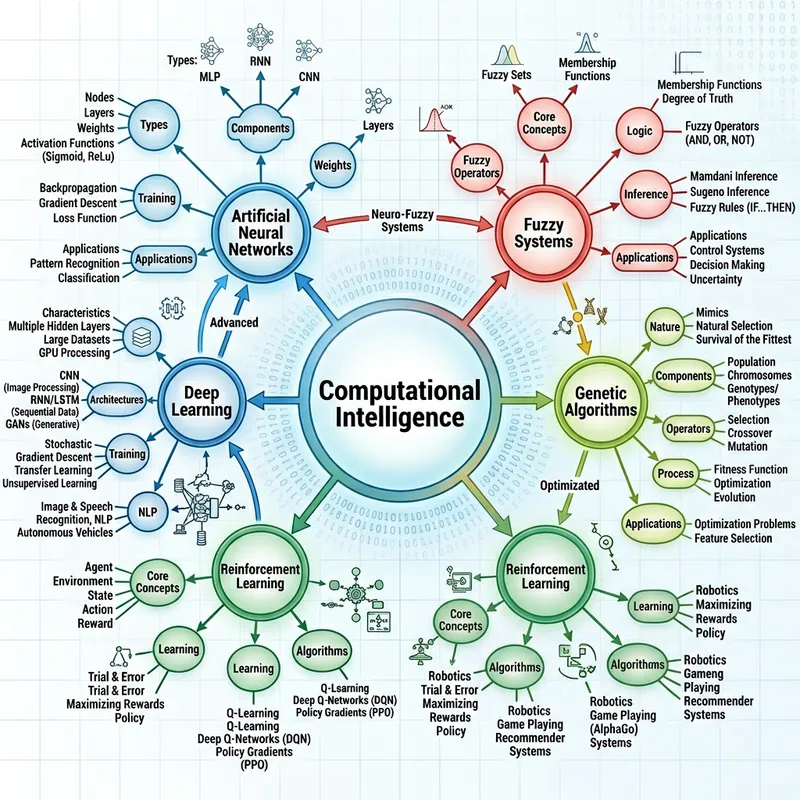

5. Milestone discoveries
Convolutional Neural Networks (CNNs) are still quite competitive with Vision Transformers in terms of speed and accuracy, as demonstrated by recent research on contemporary hybrid designs like InceptionNeXt, attention-boosted models, and self-supervised training.
More recent models, such as InceptionNeXt, reimagine traditional CNN blocks with cutting-edge design decisions influenced by Vision Transformers, producing superior accuracy (up to 99.2% on medical benchmarks) at a reduced computational cost.
Hybrid Systems: By combining CNNs with recurrent layers (such as LSTM) and attention processes, models are able to capture both broad, global patterns and local pixel details far more effectively than previous configurations.
Self-Supervised Learning: By utilizing vast quantities of unlabeled data, new training methods reduce the requirement for costly, human-labeled image databases.
Edge Optimization: By reducing model size and energy consumption, recent optimization techniques speed up and simplify the execution of real-time activities on small devices, such as autonomous driving and mobile medical scanning.
6. Specialty features from the Industry Leaders
NVIDIA has recently pioneered the CNNsNVIDIA cuDNN is a unique library that contains quick math rules for CNN layers.
Tensor Cores: Particular components found in NVIDIA graphics cards that speed up deep network training.
Computer vision is used in robot eyes and self-driving automobiles to recognize humans and traffic signals.
Convolutional Neural Networks (CNNs) for computer vision are optimized by Intel through a massive initiative that uses Xeon processors, the OpenVINO toolbox, and the oneDNN library. Tasks like object detection and image sorting are accelerated by these tools.
Qualcomm uses software development kits, hardware acceleration, and particular runtimes to optimize and operate Convolutional Neural Networks (CNNs) on mobile and edge devices. The Qualcomm AI Engine Direct (QNN SDK) and Qualcomm Neural Processing SDK are the primary tools.
7. Key Academic research
Professor Yann LeCun is a prominent researcher in Convolutional Neural Networks at the Courant Institute of Mathematical Sciences at New York University. He recently conducted extensive research into work centers on autonomous machine intelligence, joint embedding predictive architectures, and self-supervised learning.
The ImageNet course for Visual Recognition, developed by Stanford University’s Sequoia Professor of Computer Science, trained a generation of deep learning researchers.
Schemata and sequential thought processes in PDP models have been the subject of research and publications by Geoffrey Hinton, Emeritus Professor of Computer Science, University of Toronto.
8. Why CNNs Transform Industries
Convolutional Neural Networks drive innovation across multiple sectors because they automate feature extraction. Previously, programmers manually defined features for computer vision algorithms. CNNs learn these features autonomously, adapting to new data with remarkable accuracy.
Healthcare: Radiologists utilize CNNs to analyze X-rays, MRIs, and CT scans. These models detect early signs of diseases like pneumonia or tumors with speed and precision.
Autonomous Vehicles: Self-driving cars deploy CNNs to process real-time video feeds. They can also identify pedestrians, traffic signs, and other vehicles to ensure passenger safety.
Retail and E-commerce: Visual search engines leverage CNNs to let shoppers upload photos and instantly find matching products online.
Security: Facial recognition systems rely on convolutional layers to map facial structures and verify user identities securely.
Summary
Convolutional Neural Networks create a connection between human sight and machine understanding. By simplifying visual data into hierarchical, manageable segments, CNNs process intricate imagery with unparalleled efficiency.
As artificial intelligence continues to evolve, CNNs will remain the cornerstone of computer vision technology, shaping the future of how machines interact with visual media.


