Monday, November 2

Convolutional Neural Network

Convolutional Neural Network

Who discovered Convolutional Neural Networks?
Convolutional Neural Network

Who discovered Convolutional Neural Networks?

Who discovered Convolutional Neural Networks? Hubel and Wiesel provided the biological blueprint. Kunihiko Fukushima engineered the first architectural framework. Yann LeCun perfected the training methodology with LeNet-5, and Alex Krizhevsky, Ilya Sutskever, and Geoffrey Hinton unleashed its modern potential. Together, these brilliant minds built the foundation of computer vision, transforming how machines perceive and interpret the visual world. Every time facial recognition software unlocks your phone or a medical imaging system detects an early-stage illness, Convolutional Neural Networks (CNNs) perform the heavy lifting. These specialized architectures power modern computer vision, but their origins stretch back decades. Understanding the history of CNNs requires looking pas...
Convolutional Neural Network

Who are the top researchers in deep learning?

The three top researchers in deep learning are: Geoffrey Hinton: Often called the "Godfather of Deep Learning," Professor Hinton pioneered backpropagation algorithms and the development of Boltzmann machines. His groundbreaking work at the University of Toronto and Google fundamentally redefined computer vision and speech recognition. Yann LeCun: As Chief AI Scientist at Meta and a professor at New York University, LeCun invented Convolutional Neural Networks (CNNs). His innovations enable computers to process and understand visual imagery with remarkable accuracy, powering applications from facial recognition to satellite imaging. Yoshua Bengio: Based at the Université de Montréal, Bengio shaped our understanding of recurrent neural networks and probabilistic language models. His p...
Convolutional Neural Network

What is pooling in convolutional neural networks?

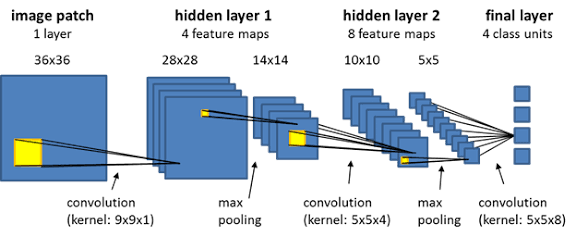
What is Pooling? Pooling sits between the convolutional layers of a neural network. After a convolutional layer extracts features—such as edges, shapes, and textures—the pooling layer condenses the resulting feature maps. Artificial intelligence relies heavily on Convolutional Neural Networks (CNNs) to process and understand visual data. When computers analyze images, they manage millions of pixels, which demands immense computational power. To solve this challenge, engineers use a technique called pooling. Pooling reduces the dimensions of data, making image processing faster and more efficient while preserving essential features. The process operates by sliding a small window, known as a filter, across the feature map. This window summarizes the values within its boundary, signific...
Convolutional Neural Network

What are hidden layers in a convolutional neural network?

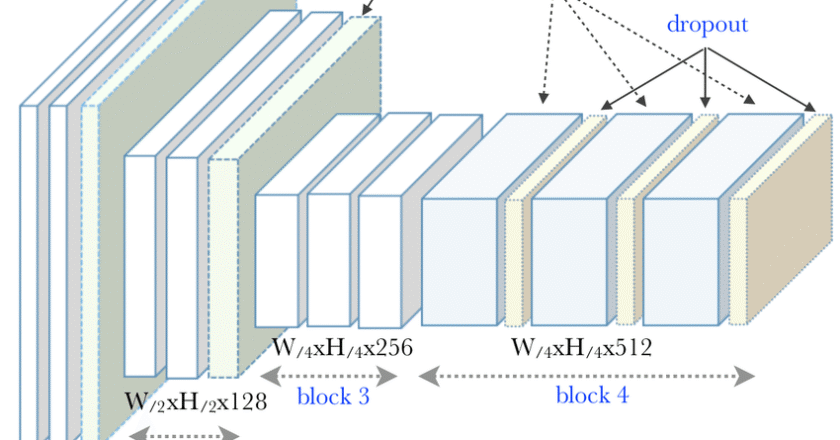
Engineers call them "hidden layers" because they neither receive data directly from the external world nor produce the final classification. Data enters the network through the input layer and exits through the output layer. Between these two points lies a series of hidden layers.  Instead, they perform the intricate calculations that make accurate predictions possible. Artificial intelligence now diagnoses medical scans, powers autonomous vehicles, and recognizes faces in milliseconds. Behind these remarkable feats lies a sophisticated architecture known as the Convolutional Neural Network (CNN). While input images and final predictions capture most of the attention, the true computational magic happens deep within the system. Hidden layers drive this process, transforming raw pixels i...
Convolutional Neural Network

Are convolutional neural networks and other networks the same?

No. Traditional artificial neural networks process data as flat vectors, but Convolutional Neural Networks (CNNs) revolutionize computer vision and spatial data analysis. Understanding the architectural differences between CNNs and standard Multi-Layer Perceptrons (MLPs) reveals why modern technology excels at recognizing images, videos, and complex patterns. The Limitation of Traditional Neural Networks Standard neural networks utilize fully connected layers. Every single neuron in one layer connects to every neuron in the subsequent layer. While this architecture handles generic tabular data effectively, it struggles immensely with visual information. Consider a standard digital image. A modest high-definition photograph contains millions of pixels. Feeding this massive volume of da...
Convolutional Neural Network

Are Convolutional Neural Networks obsolete? No. They evolve.

No, they are still relevant. CNNs currently undergo a period of evolution. Modern AI researchers increasingly combine the best attributes of both worlds. For over a decade, Convolutional Neural Networks (CNNs) served as the undisputed foundation of computer vision. Researchers and engineers relied on CNN architectures to power facial recognition, medical imaging, autonomous vehicles, and everyday photo organization. However, recent breakthroughs in artificial intelligence challenge this dominance. Emerging architectures, particularly Vision Transformers (ViTs), now rival or surpass traditional CNNs across numerous benchmarks. This technological shift prompts a critical industry question: Are CNNs obsolete? The Rise of the Vision Transformer To understand the debate, we must examine th...
Convolutional Neural Network

What are Convolutional Neural Networks mainly used for?

Convolutional Neural Networks are used by Engineers and Data Scientists for assignments that require high-level visual comprehension. The reason is these networks interpret visual contexts with outstanding accuracy. Further Explanation Artificial intelligence is continuously altering our digital realm, and Convolutional Neural Networks (CNNs) are at the leading edge of this technological shift. When users experience modern computer vision, they are interacting with CNNs. Grasping the role of a CNN allows both professionals and enthusiasts to appreciate the mechanics that drive their daily digital encounters. Decoding the Core Purpose of CNNs A Convolutional Neural Network constitutes a unique type of deep learning model specifically engineered to handle grid-like data, such as images a...
Convolutional Neural Network

Are Convolutional Neural Networks AI or not? Yes, they are.

Yes, a Convolutional Neural Network is a form of artificial intelligence because they exist as a specialized architecture within deep learning, and deep learning constitutes a subset of machine learning, Further Explanation Artificial Intelligence surrounds our daily lives, powering everything from smartphone facial recognition to complex medical diagnostics. At the heart of many of these technological advancements lies a specific algorithm known as a Convolutional Neural Network (CNN). However, a common question often arises among technology enthusiasts and curious learners: Is a CNN actually an artificial intelligence? To answer this question accurately, we must explore the architecture of CNNs, their relationship with machine learning, and their fundamental role in modern computing...
Convolutional Neural Network

What are the 4 layers of Convolutional Neural Networks?

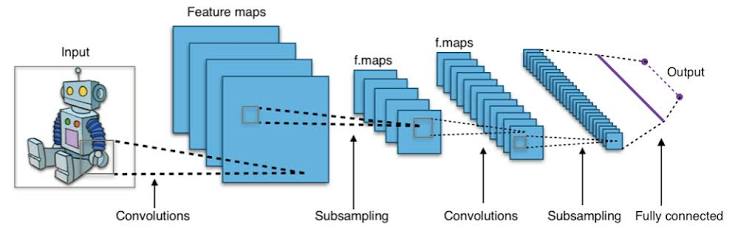
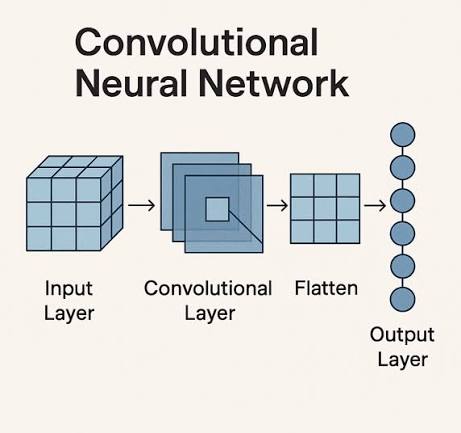
Here are the 4 layers of Convolutional Neural Networks? 1. The Convolutional Layer: The Feature Extractor Serving as the essential building block of any CNN, the convolutional layer applies mathematical filters to the input image, enabling the extraction of key features such as edges, textures, and gradients. As the filter slides across the image pixels, it calculates dot products to generate a feature map. Early layers detect simple elements like horizontal lines, while deeper layers recognize complex structures like eyes, wheels, or faces. 2. The ReLU Layer: Introducing Non-Linearity Following the convolutional layer, the Rectified Linear Unit (ReLU) layer introduces non-linearity into the model. Real-world data contains complex, non-linear relationships that linear equations cann...
Convolutional Neural Network

What is a convolutional neural network?

A Convolutional Neural Network is a unique type of deep learning architecture tailored for the processing and comprehension of visual data. By replicating the functions of the human visual cortex, these networks have significantly changed the manner in which machines perceive the environment. Look around you. Every time your smartphone unlocks using facial recognition, a medical imaging system detects anomalies, or a self-driving car navigates traffic, a specific type of artificial intelligence works behind the scenes. This technology is the Convolutional Neural Network (CNN). CNNs are a unique type of deep learning architecture tailored for the processing and comprehension of visual data. By replicating the functions of the human visual cortex, these networks have significantly changed th...
Copyright | KwasiSaah.com Terms Privacy Cookie
Αυτός που δεσμεύεται πρέπει να αποδώσει