


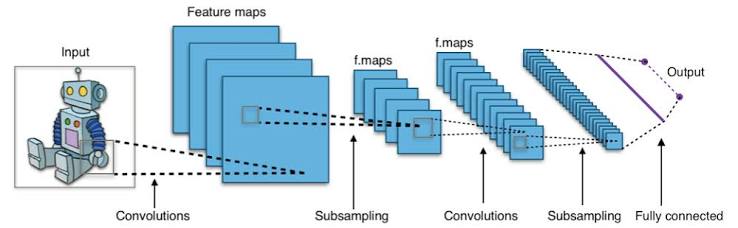
No. Traditional artificial neural networks process data as flat vectors, but Convolutional Neural Networks (CNNs) revolutionize computer vision and spatial data analysis. Understanding the architectural differences between CNNs and standard Multi-Layer Perceptrons (MLPs) reveals why modern technology excels at recognizing images, videos, and complex patterns.
The Limitation of Traditional Neural Networks
Standard neural networks utilize fully connected layers. Every single neuron in one layer connects to every neuron in the subsequent layer. While this architecture handles generic tabular data effectively, it struggles immensely with visual information.
Consider a standard digital image. A modest high-definition photograph contains millions of pixels. Feeding this massive volume of data into a fully connected network demands an astronomical number of trainable parameters. This computational burden causes severe overfitting and slows processing speeds to a crawl. Furthermore, standard networks completely ignore spatial hierarchies. If a subject shifts slightly within the frame, a traditional network fails to recognize the object because it loses the contextual relationship between neighboring pixels.
The Convolutional Advantage: Spatial Awareness
Convolutional Neural Networks effectively resolve these challenges by employing a specialized architecture that is designed for grid-like data, like images. Instead of establishing independent connections for every pixel, CNNs apply mathematical operations called convolutions.
A CNN applies small, sliding filters—known as kernels—across the input image. These filters scan the visual field systematically, extracting fundamental features like edges, corners, and textures in the early layers. Deeper layers then combine these elementary features to recognize complex shapes and entire objects.
This mechanism provides two distinct structural advantages:
Parameter Sharing: The network reuses the exact same filter across the entire image. This efficiency slashes the total number of parameters, accelerating training times and reducing memory consumption.
Translation Invariance: Because the filters scan every section of the input, the network recognizes a target object regardless of its exact location within the frame.
Key Architectural Differences at a Glance
- Feature Traditional Neural Networks (MLPs) Convolutional Neural Networks (CNNs)
- Another classification of primary data types encompasses tabular formats, 1D vectors, images, videos, and spatial grids in both 2D and 3D.
- Connectivity Fully connected (Dense layers) Locally connected via filters and pooling
- Parameter Scale Extremely high for large inputs Highly optimized through weight sharing
- Spatial Processing Ignores spatial arrangement Preserves and leverages spatial hierarchies
Transforming Modern Technology
Healthcare professionals employ these networks to scrutinize medical images, detecting irregularities in X-rays and MRIs with exceptional accuracy. Security systems, facial recognition technologies, and augmented reality applications all rely on the advanced feature-extraction abilities that are characteristic of convolutional architecture.
Experience the Future of AI
Convolutional Neural Networks represent a monumental leap forward in machine learning capability. By mimicking the localized processing of the human visual cortex, CNNs bridge the gap between raw digital data and intelligent computer comprehension.
Explore our platform today to discover how advanced neural architectures drive innovation and empower organizations to solve complex visual challenges.


