


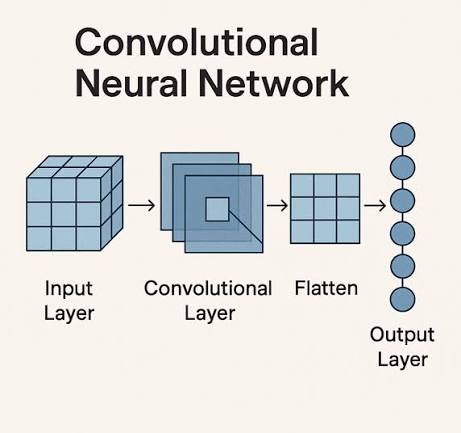
Yes, a Convolutional Neural Network is a form of artificial intelligence because they exist as a specialized architecture within deep learning, and deep learning constitutes a subset of machine learning,
Further Explanation
Artificial Intelligence surrounds our daily lives, powering everything from smartphone facial recognition to complex medical diagnostics. At the heart of many of these technological advancements lies a specific algorithm known as a Convolutional Neural Network (CNN). However, a common question often arises among technology enthusiasts and curious learners: Is a CNN actually an artificial intelligence?
To answer this question accurately, we must explore the architecture of CNNs, their relationship with machine learning, and their fundamental role in modern computing.
Defining the Core Terms
To understand the classification of a CNN, we must first establish the hierarchy of modern computer science:
Artificial Intelligence (AI): AI serves as the broad umbrella term for any technology enabling computers to mimic human intelligence, solve problems, and make decisions.
Machine Learning (ML): ML represents a vital subset of AI. Instead of relying on explicit programming, machine learning algorithms utilize data and algorithms to learn and improve automatically.
Deep Learning: Deep learning forms a specialized branch of machine learning. It uses multi-layered artificial neural networks to analyze complex patterns.
Convolutional Neural Networks (CNNs): A CNN functions as a specific type of deep learning architecture designed primarily for processing grid-like data, such as images and video.
How Convolutional Neural Networks Function
Understanding why CNNs represent artificial intelligence requires looking at how they process information. Traditional computer programming requires humans to write strict rules for every task. Conversely, a CNN learns directly from examples.
When engineers train a CNN, the network processes thousands of images. Through mathematical operations called convolutions, the network automatically detects features such as edges, textures, shapes, and eventually complex objects like faces or vehicles. The system refines its accuracy continuously through trial and error, mirroring human visual learning. This autonomous pattern recognition defines the essence of artificial intelligence.
Real-World Applications of CNNs
Convolutional Neural Networks drive many of the intelligent systems we utilize daily. Their primary applications include:
Computer Vision: CNNs power facial recognition software on smartphones and security systems.
Autonomous Vehicles: Self-driving cars rely on CNNs to process live camera feeds, identifying pedestrians, traffic signs, and other vehicles in real time.
Healthcare Diagnostics: Medical professionals use CNN-powered imaging tools to detect anomalies in X-rays, MRIs, and CT scans with remarkable precision.
Retail and Search: E-commerce platforms employ CNNs for visual search capabilities, allowing users to find products using photos rather than text.
Conclusion
Convolutional Neural Networks represent a cornerstone of modern Artificial Intelligence. By bridging the gap between raw visual data and intelligent machine comprehension, CNNs enable computers to perceive the world in ways previously exclusive to humans.
As technology continues to evolve, CNNs will undoubtedly remain at the forefront of AI innovation, shaping the future of automation, healthcare, and digital interaction.


