


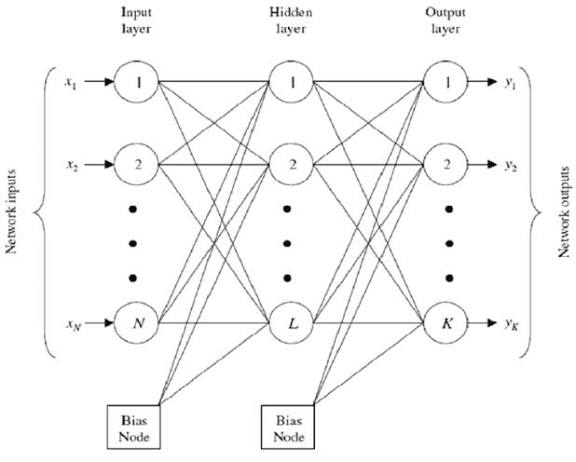
Engineers call them “hidden layers” because they neither receive data directly from the external world nor produce the final classification. Data enters the network through the input layer and exits through the output layer. Between these two points lies a series of hidden layers. Instead, they perform the intricate calculations that make accurate predictions possible.
Artificial intelligence now diagnoses medical scans, powers autonomous vehicles, and recognizes faces in milliseconds. Behind these remarkable feats lies a sophisticated architecture known as the Convolutional Neural Network (CNN). While input images and final predictions capture most of the attention, the true computational magic happens deep within the system. Hidden layers drive this process, transforming raw pixels into meaningful insights.
Understanding the Foundation of Convolutional Neural Networks
To comprehend hidden layers, you must first understand the structure of a CNN. Traditional neural networks struggle to process visual data efficiently because images contain massive amounts of pixels. CNNs solve this challenge by using specialized layers that scan images and extract essential features.
The Hierarchy of Hidden Layers
Hidden layers do not operate as a single monolithic block. Instead, a standard CNN utilizes a sequence of distinct hidden layers, each building upon the output of the preceding one. This sequential approach creates a powerful hierarchy of feature extraction.
1. Convolutional Layers
Convolutional layers form the core of the network. These layers apply mathematical filters—known as kernels—across the image. As the filters slide over the visual data, they detect specific patterns such as horizontal lines, vertical edges, and simple gradients.
2. Activation Layers (ReLU)
Following the convolutions, activation functions like the Rectified Linear Unit (ReLU) introduce non-linearity into the network. This crucial step enables the CNN to learn complex, real-world patterns rather than simple linear relationships.
3. Pooling Layers
Pooling layers reduce the spatial dimensions of the data. By summarizing regions of the image, these layers decrease computational complexity and ensure the network recognizes features even if their exact position shifts slightly within the frame.
4. Fully Connected Layers
Towards the end of the hidden layer sequence, fully connected layers integrate all the extracted features. They synthesize the edges, shapes, and textures identified by the earlier layers to form a complete understanding of the image content.
How Hidden Layers Transform Visual Data
As data flows deeper into the network, hidden layers progress from concrete details to abstract concepts.
- Early Hidden Layers: These layers detect fundamental visual elements like edges, curves, and color contrasts.
- Intermediate Hidden Layers: These layers combine basic shapes to recognize specific object parts, such as eyes, wheels, or text characters.
- Deep Hidden Layers: The final hidden layers assemble these parts into complete objects.
Experience the Power of Advanced AI Architecture
Hidden layers are the cognitive driving force of modern computer vision. By segmenting complicated visual data into simpler components, they facilitate machines in interpreting the world with notable accuracy.


