Saturday, November 21
Are Convolutional Neural Networks obsolete? No. They evolve.
Convolutional Neural Network

Are Convolutional Neural Networks obsolete? No. They evolve.

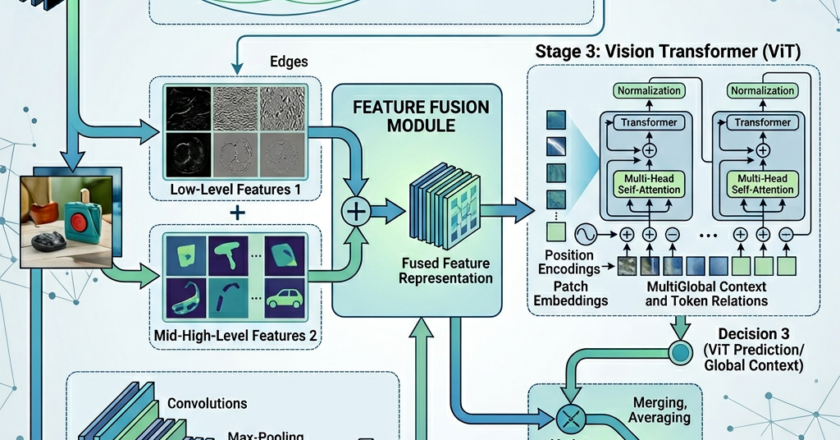
No, they are still relevant. CNNs currently undergo a period of evolution. Modern AI researchers increasingly combine the best attributes of both worlds. For over a decade, Convolutional Neural Networks (CNNs) served as the undisputed foundation of computer vision. Researchers and engineers relied on CNN architectures to power facial recognition, medical imaging, autonomous vehicles, and everyday photo organization. However, recent breakthroughs in artificial intelligence challenge this dominance. Emerging architectures, particularly Vision Transformers (ViTs), now rival or surpass traditional CNNs across numerous benchmarks. This technological shift prompts a critical industry question: Are CNNs obsolete? The Rise of the Vision Transformer To understand the debate, we must examine th...
Convolutional Neural Network

What are Convolutional Neural Networks mainly used for?

Convolutional Neural Networks are used by Engineers and Data Scientists for assignments that require high-level visual comprehension. The reason is these networks interpret visual contexts with outstanding accuracy. Further Explanation Artificial intelligence is continuously altering our digital realm, and Convolutional Neural Networks (CNNs) are at the leading edge of this technological shift. When users experience modern computer vision, they are interacting with CNNs. Grasping the role of a CNN allows both professionals and enthusiasts to appreciate the mechanics that drive their daily digital encounters. Decoding the Core Purpose of CNNs A Convolutional Neural Network constitutes a unique type of deep learning model specifically engineered to handle grid-like data, such as images a...
Artificial Intelligence

What is Artificial Intelligence? A Primer for beginners.

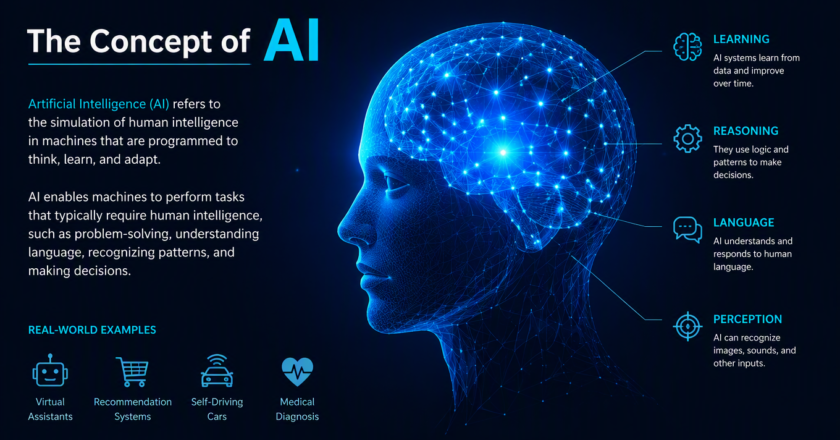
Definition Artificial Intelligence is the transformative branch of computer science dedicated to building systems capable of performing tasks that typically require human intellect. These advanced systems process vast amounts of data, recognize complex patterns, and execute decision-making processes autonomously. Modern AI encompasses several core disciplines, including machine learning, natural language processing, and computer vision. Machine learning algorithms allow software applications to improve their accuracy over time without explicit programming. Consequently, AI applications power everyday technologies, from virtual assistants and fraud detection systems to autonomous vehicles and medical diagnostic tools. Organizations across all industries leverage artificial intelligen...
AI Application

Can AI be used for Data Mining? Yes.

Can AI be used for Data Mining? Yes. Artificial Intelligence extracts vast repositories of insightful information from unstructured data. This valuable trove of facts and knowledge is not obtainable through conventional or  traditional data extraction methodologies. Understanding the Convergence of AI and Data Mining Data mining involves discovering patterns, correlations, and anomalies within large datasets using machine learning, statistics, and database systems. When organizations integrate Artificial Intelligence into this process, they elevate standard data mining into an advanced, predictive science. Traditional algorithms require explicit programming to find specific patterns. Conversely, AI models learn autonomously from the data itself. Machine learning algorithms, deep learn...
Convolutional Neural Network

Are Convolutional Neural Networks AI or not? Yes, they are.

Yes, a Convolutional Neural Network is a form of artificial intelligence because they exist as a specialized architecture within deep learning, and deep learning constitutes a subset of machine learning, Further Explanation Artificial Intelligence surrounds our daily lives, powering everything from smartphone facial recognition to complex medical diagnostics. At the heart of many of these technological advancements lies a specific algorithm known as a Convolutional Neural Network (CNN). However, a common question often arises among technology enthusiasts and curious learners: Is a CNN actually an artificial intelligence? To answer this question accurately, we must explore the architecture of CNNs, their relationship with machine learning, and their fundamental role in modern computing...
Convolutional Neural Network

What are the 4 layers of Convolutional Neural Networks?

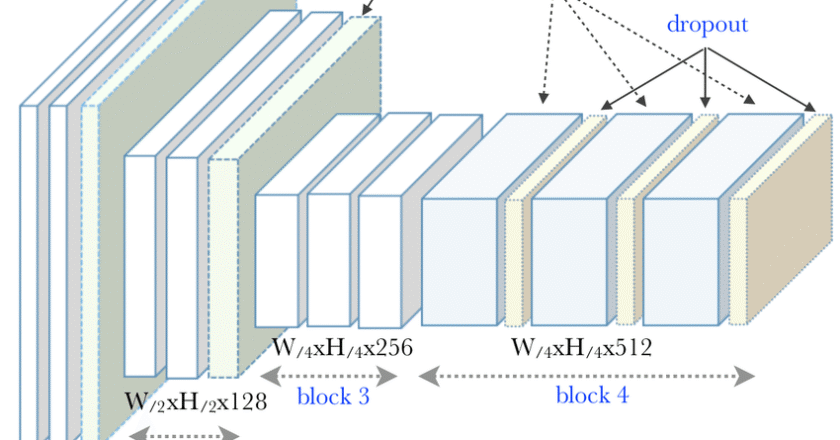
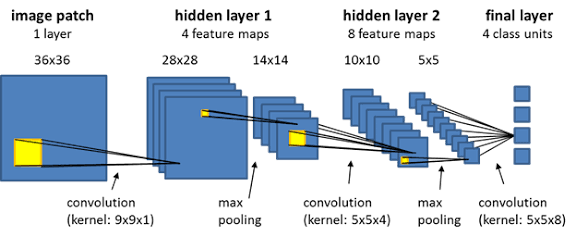
Here are the 4 layers of Convolutional Neural Networks? 1. The Convolutional Layer: The Feature Extractor Serving as the essential building block of any CNN, the convolutional layer applies mathematical filters to the input image, enabling the extraction of key features such as edges, textures, and gradients. As the filter slides across the image pixels, it calculates dot products to generate a feature map. Early layers detect simple elements like horizontal lines, while deeper layers recognize complex structures like eyes, wheels, or faces. 2. The ReLU Layer: Introducing Non-Linearity Following the convolutional layer, the Rectified Linear Unit (ReLU) layer introduces non-linearity into the model. Real-world data contains complex, non-linear relationships that linear equations cann...
Convolutional Neural Network

What is a convolutional neural network?

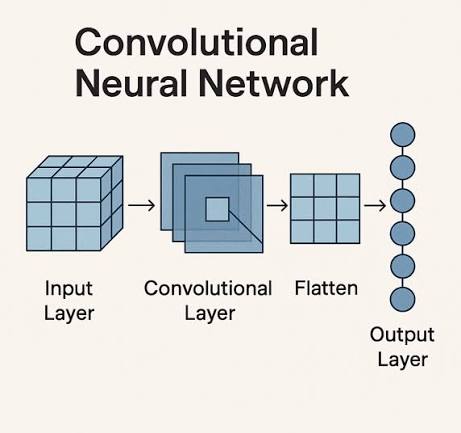
A Convolutional Neural Network is a unique type of deep learning architecture tailored for the processing and comprehension of visual data. By replicating the functions of the human visual cortex, these networks have significantly changed the manner in which machines perceive the environment. Look around you. Every time your smartphone unlocks using facial recognition, a medical imaging system detects anomalies, or a self-driving car navigates traffic, a specific type of artificial intelligence works behind the scenes. This technology is the Convolutional Neural Network (CNN). CNNs are a unique type of deep learning architecture tailored for the processing and comprehension of visual data. By replicating the functions of the human visual cortex, these networks have significantly changed th...
Artificial Intelligence

Demystifying Artificial Intelligence: How Systems Learn and Think

Artificial Intelligence (AI) no longer belongs to the realm of science fiction. Today, it powers our digital assistants, optimizes global supply chains, and accelerates medical research. But how does this technology actually process information? To understand AI, one must look past the buzzwords and examine the fundamental processes that allow machines to simulate human intelligence. The Foundation: Data as Fuel At its essence, artificial intelligence operates based on data. Developers input extensive datasets into computer systems to create a basis for learning. Since computers do not possess the ability to 'think' biologically, they depend on intricate mathematical models and a series of guidelines referred to as algorithms. By analyzing millions of data points, these algorithms uncove...
Artificial Intelligence

What is Data Mining in Artificial Intelligence?

As we navigate the vast expanse of the digital landscape, we are constantly generating and interacting with vast amounts of data. This data, often referred to as "big data," holds the key to unlocking new insights and driving innovation in various fields. One such field that is revolutionizing the way we approach data analysis is Artificial Intelligence (AI). AI-powered data mining is transforming the way we extract, analyze, and utilize data, enabling businesses and organizations to make informed decisions and drive growth. In this article, we will delve into the world of data mining in AI, exploring its concepts, techniques, and applications. What is Data Mining? The technique of automatically identifying trends, connections, and insights from massive databases is known as data mini...
Artificial Intelligence

How Artificial intelligence is applied in search engine algorithms

In the early days of the internet, search engines relied on rigid keyword matching to retrieve results. Today, Artificial Intelligence (AI) has fundamentally rewritten that playbook. Modern search engines no longer simply scan for text strings; they act as sophisticated analytical engines that decode human intent, context, and semantic meaning in milliseconds. Understanding how AI powers these algorithms offers a glimpse into the future of digital discovery. From Keyword Matching to Semantic Understanding Modern algorithms employ Natural Language Processing (NLP) to parse human language. Advanced models like Google’s BERT (Bidirectional Encoder Representations from Transformers) analyze the relationship between words in a query. Instead of focusing on isolated keywords, the algorithm ...
Copyright | KwasiSaah.com Terms Privacy Cookie
Αυτός που δεσμεύεται πρέπει να αποδώσει